

If you hold real property with another person, it is important to know whether you hold the property as joint tenants or as tenants in common.
What’s the difference?
A joint tenancy is where two (or more) people (or legal entities) own an asset jointly – that is 100% of the asset is held in ALL names. No one owner has a fixed interest in the asset. This is commonly the situation between spouses. When one owner of the asset dies, their death is recorded and the asset automatically transfers into the name of the surviving owner. A “jointly held” asset does not (except in some instances in New South Wales) pass to your estate – it passes to the survivor automatically.
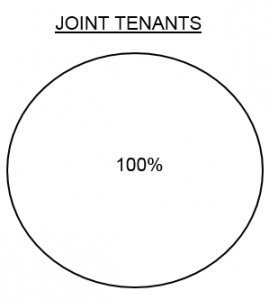
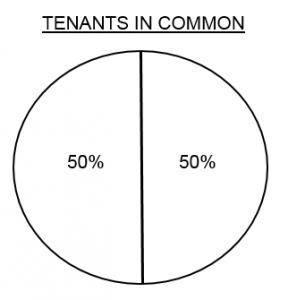
Conversely, a tenancy in common is where two (or more) people (or legal entities) own an asset, but each person owns a specified share. This situation is common in business dealings and in dealings where parties wish to own distinct interests in an asset. The below diagram shows a “tenancy in common” between a husband and wife, with the husband owning 50% of the asset, and the wife owning 50% of the asset. On the death of one of the spouses, their share passes to their estate and is distributed in accordance with their Will. The share does not pass automatically to the surviving spouse.
There are benefits and downsides to each type of holding; accordingly, owners need to be aware of the consequences of each option – to ensure suitability.
What happens if I want to change the way the asset is held?
If you hold an asset as joint tenants, and wish to sever the tenancy, or if you hold the property as tenants in common in equal shares and want to become joint tenants, it is possible to change the way the property is held. These transactions are commonly effected for estate planning or family law purposes.
This change is effected by way of a form signed by one or both property owners, which is then stamped and registered with the Titles Registry as a change of tenure transaction. In some circumstances, there is a transfer duty exemption which can apply.
If you wish to discuss changing the tenure on your property, please contact our office on 07 5574 3560.